Pre-Mortem highlights and allows us to hunt down most product success obstacles before even MVP development started.
Recently we at co-Found.xyz shared Basic Sample MVP Scope article. MVP Scope is strong take for product success. But Pre-Mortem highlights and allows us to hunt down most product success obstacles before even MVP development started. This isn’t a 100% accurate guide—just a working draft to get you quick started.
Pre-Mortem analysis job is to test the business idea for “viability”: predict the reasons for a possible failure and suggest ways to avoid it.
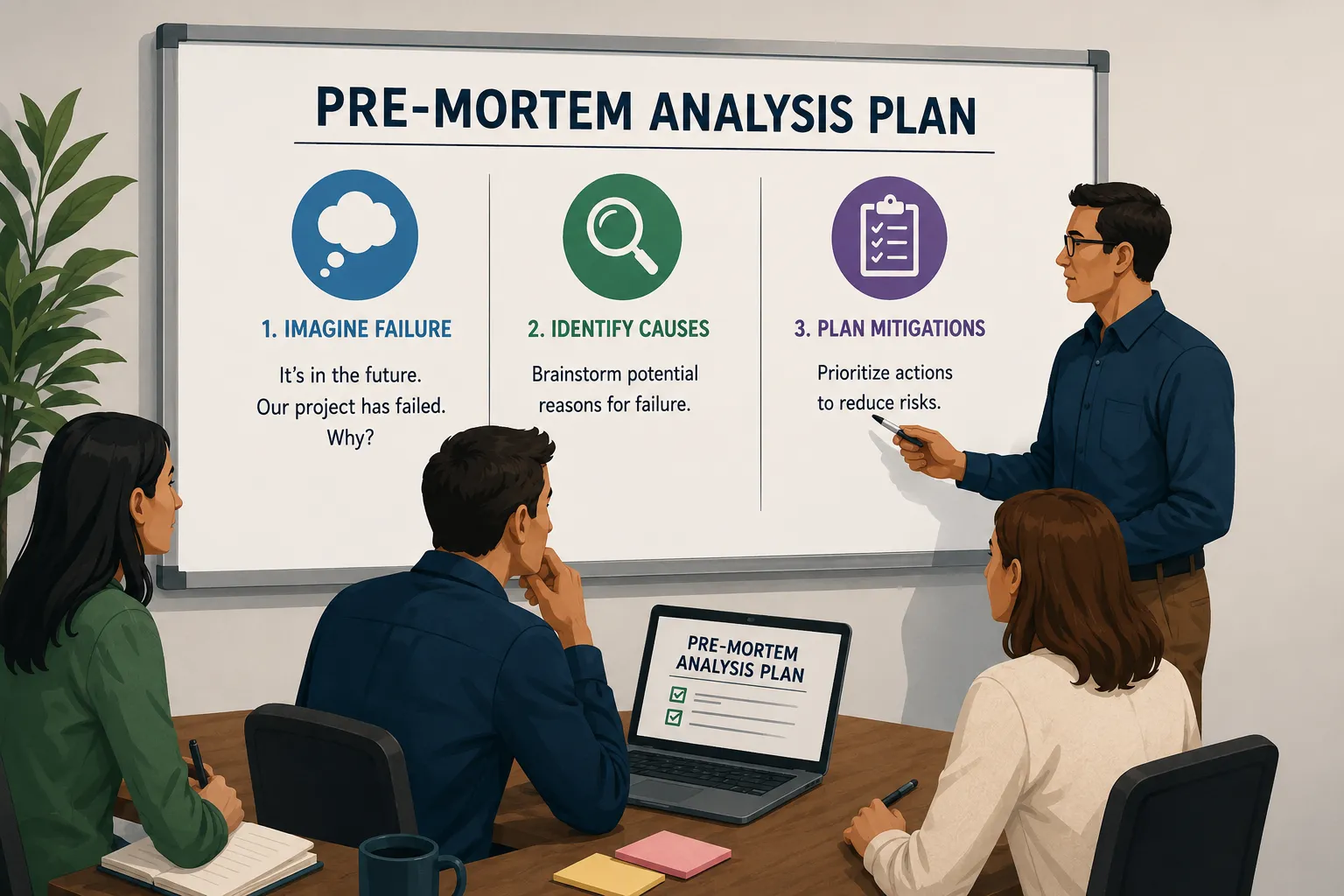
With possible reasons for failure (lack of budget, coding errors, regulatory rejection, low demand, the market turned out to be too small, the technical solution was too complex and expensive to maintain, competitors released a similar free feature a month after our launch, we were unable to get marketing right, and customer acquisition cost more than it generated) we do:
- compile and categorize the list (causes brainstorm)
- classify them by probability (risk analysis)
- classify by impact (risk analysis)
- plan preventive actions (solutions development)
Practical Structure
1. Product/Service Description (Introduction)
Here’s a brief overview:
- what it is
- for whom
- what problem it solves
- how it makes money
- why people should use it
For example:
“An online service delivering farm-fresh produce to residents of major cities.”
Or:
“A mobile app for finding local repair professionals.”
No need for a lot of text.
2. Hypothetical Scenario of Failure / Disaster / “Obituary”
This is the main part of the methodology. It goes something like this:
“Twelve months after launch, the project shut down. There weren’t enough users, expenses exceeded revenue, and customers didn’t return.”
“Twelve months after launch, the platform has zero growth in active users, and investors have stopped funding.”
Options:
- There weren’t enough active users who had already been attracted
- Customers didn’t return
- Growth in active users is too low
- The platform has zero growth in active users
- expenses exceeded revenue
- investors stopped funding
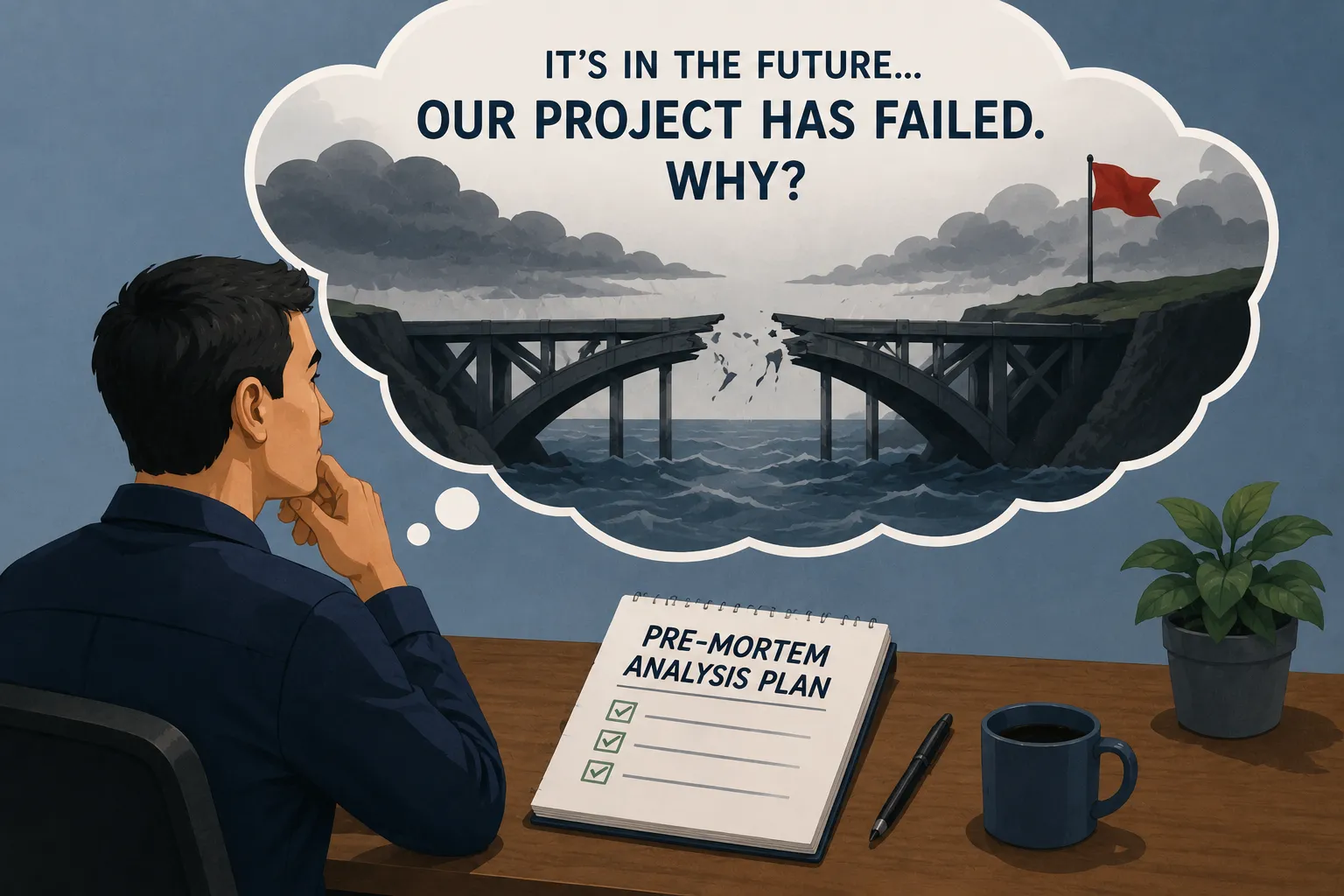
Critically important:
- Write as if the failure has already happened
- not “could happen,” but “has happened”
This psychologically helps you think more honestly.
3. Reasons for Failure (The Killers)
This is the core of the work. Here you need to figure out:
- what could have gone wrong
- why the business didn’t survive
Generate 15–30 reasons for failure. Even if they seem absurd at first. Divide the reasons into categories.
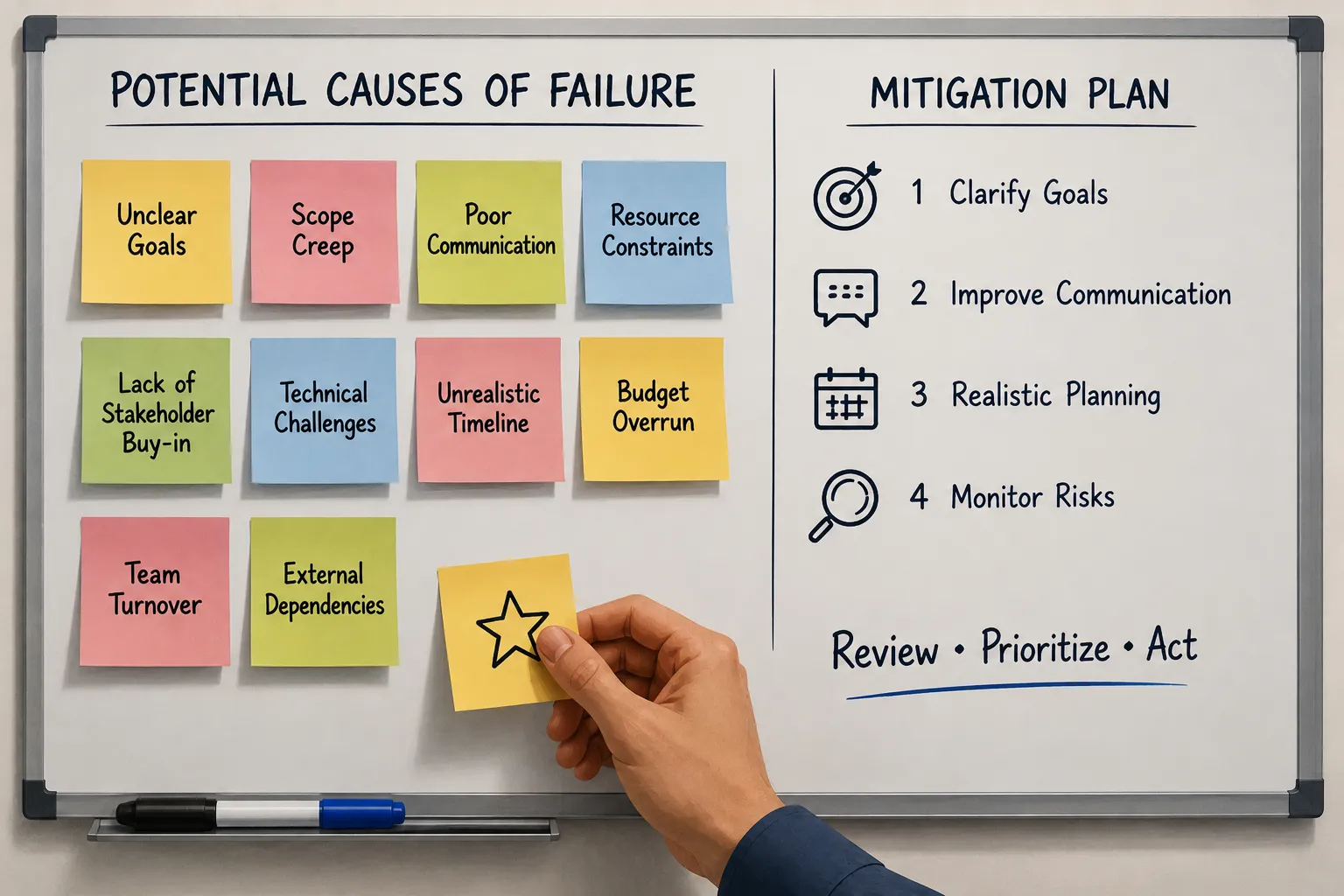
The best categories for analysis
Market
- No real demand
- The problem isn’t that important
- People aren’t willing to pay
- the market is too small
- Low retention
Competition
- There are already strong competitors
- the product isn’t unique
- Competitors have larger budgets
- Competitors have released a similar free feature
Finances
- The launch is too expensive
- unit economics don’t add up
- Advertising costs more than revenue
- insufficient budget
Product
- Complex UX
- The product solves the “wrong” problem
- Failure to deliver on promises
- Unstable service performance
- difficulty scaling
- Too complex and expensive to maintain
Marketing
- No customer acquisition channel
- incorrect target audience
- Weak positioning
- Reliance on paid advertising
Operations
- Can’t keep up with order processing
- logistics issues
- reliance on a single person
Team
- Conflicts
- lack of skills
- burnout
Legal / external factors
- Regulations
- seasonality
- economic crisis
4. Risk Assessment
Use a simple scale: Probability and Impact on the project. List the top 5 most dangerous / critical risks in a table:
| Risk | Probability | Impact | (?) How to avoid |
|---|---|---|---|
| No demand | High | Critical | MVP + customer interviews |
| Expensive advertising | Medium | High | SEO / partnerships / referral model |
| Technical bugs | Medium | Medium | Testing |
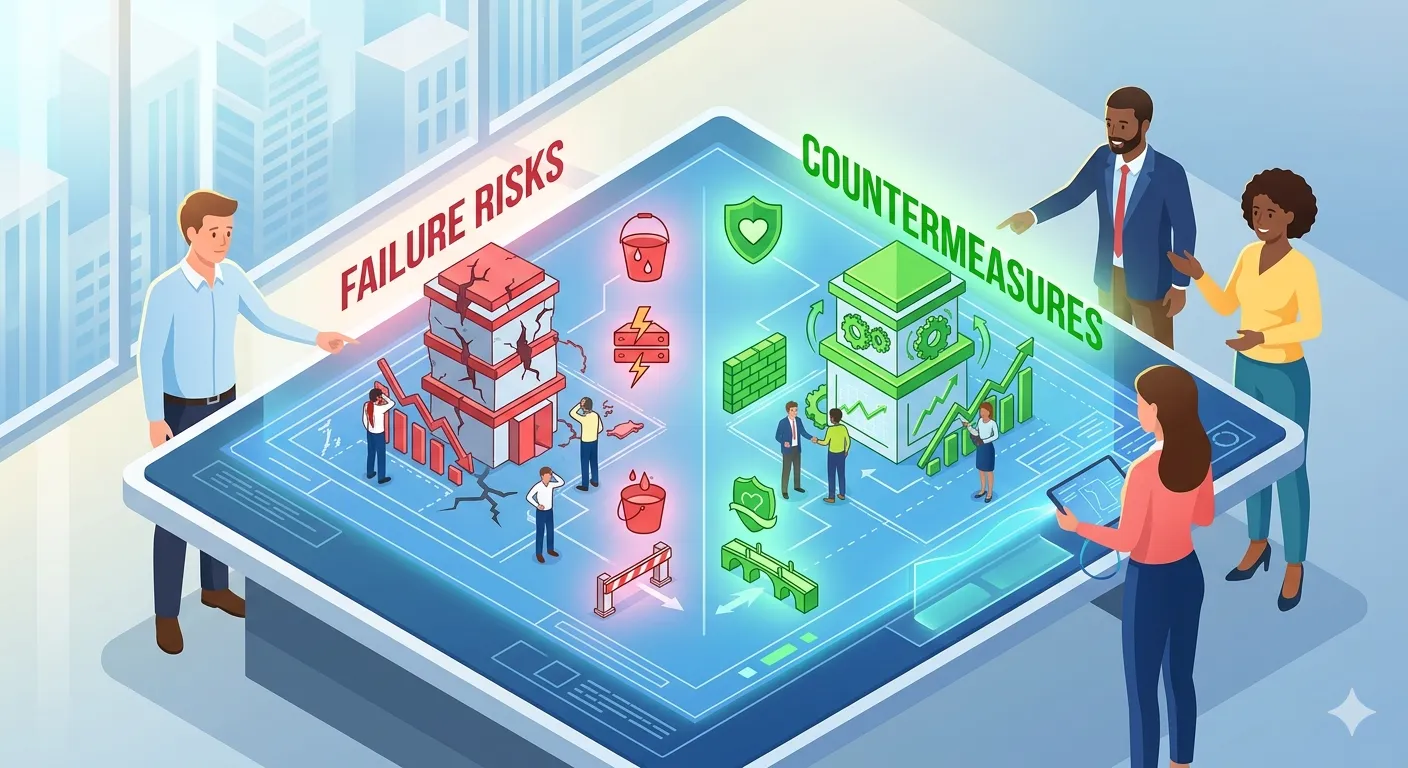
5. How to Avoid Failure: “Threat — Countermeasure”
For each problem/critical cause of failure, you must specify: what we will do now to prevent this from happening in the future:
- what to do
- how to test the hypothesis earlier
- how to reduce the risk — preventive action
For example:
| Risk | Preventive action (how to avoid) | Key Performance Indicator (KPI) |
|---|---|---|
| No demand | MVP + customer interviews | % of users willing to use or pay; number of registrations/applications after MVP; Retention Rate |
| Expensive marketing | SEO / partnerships / referral model | CAC (customer acquisition cost); CAC < LTV; share of organic traffic; marketing ROI |
| Complex product | UX testing | Completion Rate for key scenarios; time to complete a key action; number of errors or support requests; NPS / CSAT |
| Users do not understand the product’s value | Series of in-depth interviews (CustDev) prior to MVP launch | Landing page conversion > X% |
| High customer acquisition cost (CAC) | Testing advertising channels on small budgets | CAC < LTV (customer lifetime value) |
| Risk | Prevention Action | KPI | Threshold |
|---|---|---|---|
| No demand | MVP + interviews | Retention D7 | >25% |
| Expensive marketing | SEO + referrals | CAC/LTV | <1:3 |
| Complex product | UX testing | Task Success Rate | >80% |
6. Conclusion
Overall verdict: Is the idea viable, and what fundamental changes should be made to the strategy today? Don’t write:
“The idea is bad.”
Better to say:
“The project has potential, but the critical risks are high competition and uncertain demand. Before launch, we need to test users’ willingness to pay and optimize acquisition channels.”
- Look for “elephants in the room”: pay attention to problems that are usually uncomfortable to discuss (such as team conflicts or outdated technology).
- Don’t focus solely on the technical aspects: most often, projects “die” due to a lack of sales or a misunderstanding of the market, not because the code was bad.
- Use numbers: instead of “people won’t like it,” write “the cost of acquisition will exceed $5, which will make the business unprofitable.”